The efficacy of yogic rest techniques is validated by demonstrable, quantifiable changes in neurophysiology, endocrinology, and cellular biology. The practices systematically recalibrate the body’s central regulatory systems.
Autonomic Nervous System (ANS) Regulation: Shifting from Fight to Repair
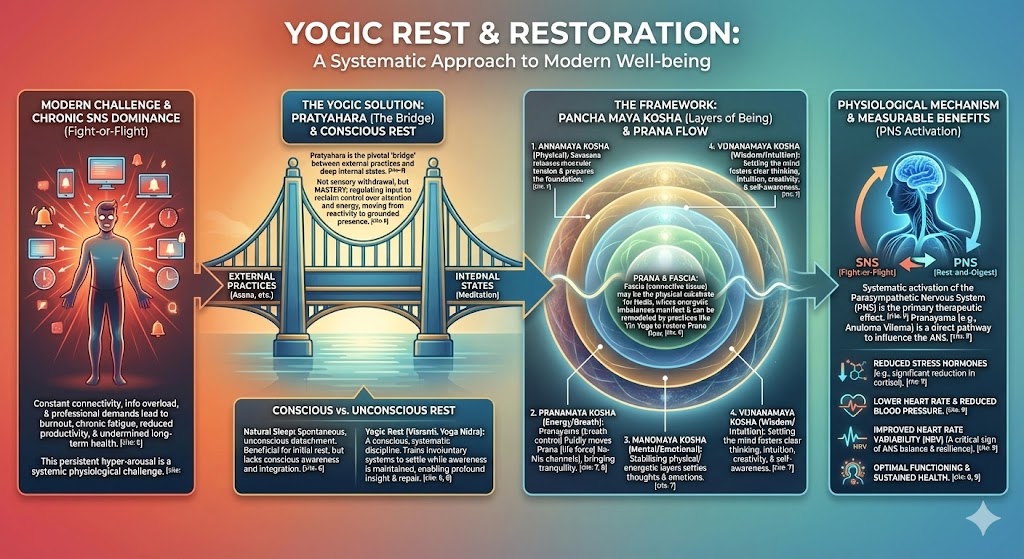
The primary therapeutic effect of yogic deep relaxation, whether through Savasana or Yoga Nidra, is the systematic activation of the Parasympathetic Nervous System (PNS)—the “rest-and-digest” mechanism—and the resulting deactivation of the Sympathetic Nervous System (SNS)—the “fight-or-flight” response.
This shift to PNS dominance initiates a cascade of measurable health improvements. Studies consistently show that deep relaxation dampens the stress response and optimizes well-being. Quantifiable results include a significant reduction in stress hormones, such as cortisol. Cardiovascular benefits are marked by lower heart rate and reduced blood pressure, impacts observed equally in hypertensive and normotensive individuals. Furthermore, researchers confirm that these practices improve Heart Rate Variability (HRV), a critical sign of autonomic nervous system balance, by shifting the body from a stressed state to a relaxed one, thereby enhancing overall resilience.
Pranayama, or controlled breathing, provides a direct and immediate pathway to influencing the ANS. Yogic exercises like Anuloma Viloma (Alternate Nostril Breathing) significantly enhance parasympathetic tone, even after short, focused periods of practice. This ability to deliberately stimulate the PNS is an accessible and potent tool for maintaining health and a sense of well-being, particularly in the face of anxiety and depression.
Vagus Nerve Stimulation (VNS): The Neural Highway to Calm
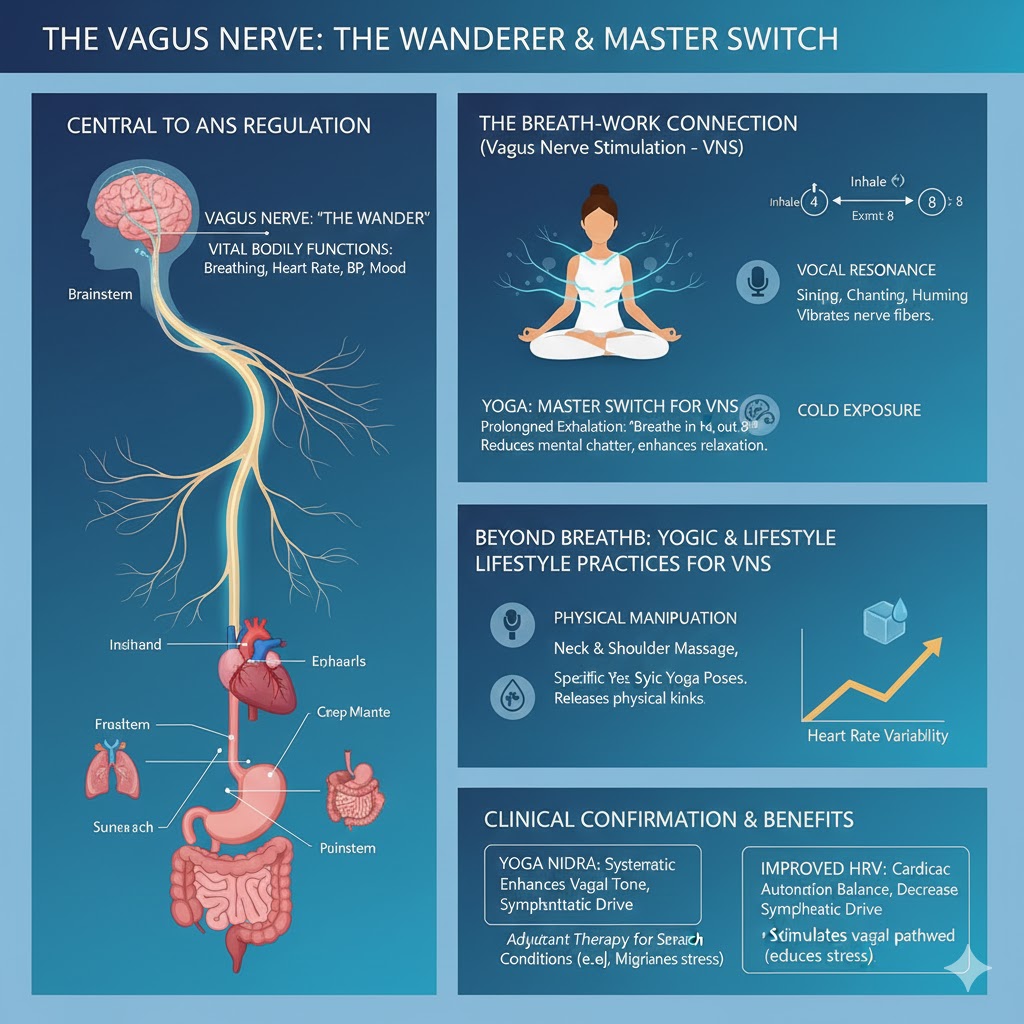
Central to ANS regulation is the Vagus nerve, often referred to as the “wanderer” due to its extensive reach from the brain to the major organs, including the heart, lungs, and stomach. This nerve regulates vital bodily functions—breathing, heart rate, blood pressure, and mood—and is the primary conduit for conveying messages of safety and restoration to the entire system.
Yoga utilizes the breath as the master switch for Vagus Nerve Stimulation (VNS). Slow, deep belly breathing, particularly when the exhalation is consciously prolonged relative to the inhalation (e.g., breathing in for a count of four and out for a count of eight), serves as a powerful stimulus for the Vagus nerve. This simple technique, requiring only minutes, reduces stressful mind chatter and encourages the relaxation response.
Beyond breath, VNS can be achieved through other yogic and lifestyle practices:
- Vocal Resonance: Singing, chanting, humming, or even gargling water vibrates the nerve fibers passing through the throat and neck.
- Physical Manipulation: Regular massages of the neck and shoulders, as well as specific yoga poses that relieve physical kinks, contribute to vagal tone.
- Cold Exposure: Brief, short-term exposure to cold temperatures, such as a cold-water rinse at the end of a shower or splashing cold water on the face, stimulates the vagal pathways and reduces the natural stress response.
Clinical studies confirm that VNS, specifically through systematic relaxation like Yoga Nidra, significantly enhances vagal tone and decreases sympathetic drive, thus improving cardiac autonomic balance. This finding validates Yoga Nidra as an effective adjuvant therapy for managing stress-related conditions, such as migraines.
Cellular, Structural, and Neurocognitive Repair
The benefits of yogic rest extend beyond temporary relaxation into the realm of cellular and neurological restructuring.
Chronic stress is a powerful driver of chronic inflammation, leading to numerous long-term health issues. Regular yoga practice has been demonstrated to reduce key inflammatory markers, such as the cytokine Interleukin-6 (IL-6) and Tumor Necrosis Factor-alpha (TNF-α), indicating a profound long-term effect on the immune system. By reducing chronic inflammation, yoga supports neurological recovery and growth, significantly impacting immunity and reducing the risk of neurodegenerative diseases.
Furthermore, deep yogic practices actively foster neuroplasticity—the brain’s ability to change and form new neural connections. Functional brain imaging reveals that practitioners of yoga and meditation exhibit greater Grey Matter Volume (GMV) in regions associated with emotional regulation and executive functioning. This structural strengthening, which often correlates positively with years of practice, translates directly into improved cognitive sharpness, reduced cognitive failures in attention and memory, enhanced focus, and increased emotional resilience.
The deep, conscious relaxation induced by practices like Yoga Nidra activates the pineal gland, resulting in the release of melatonin. Melatonin is a potent antioxidant crucial for regulating immune function, managing blood pressure, and inducing restful sleep. By boosting melatonin, yogic rest facilitates cellular rejuvenation and repair, directly contributing to the body’s ability to fight germs and infections. The sustained awareness state of Yoga Nidra guides the brain into a state between wakefulness and sleep, effectively resetting stress-related neural pathways and supporting memory consolidation.