The Problem: Your “On” Switch is Stuck
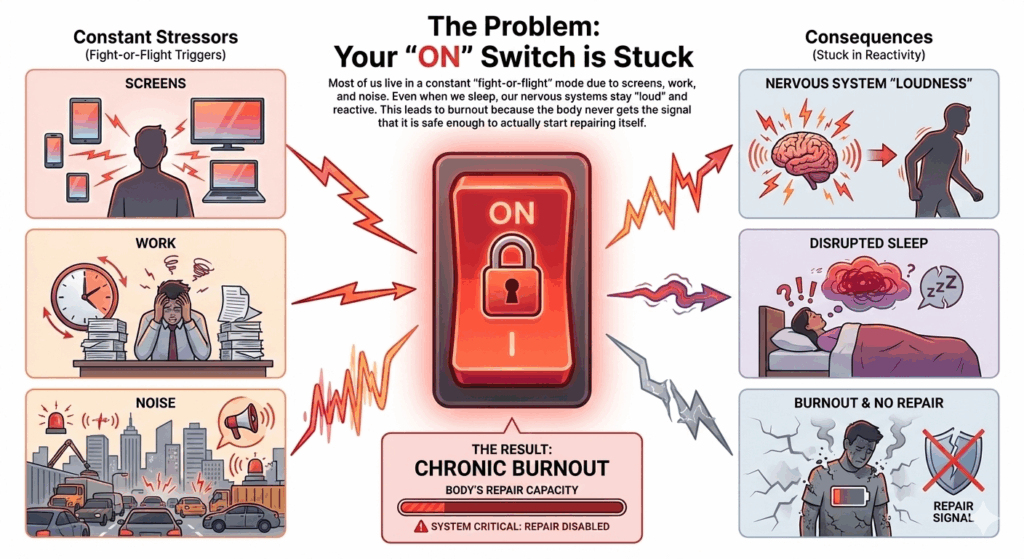
Most of us live in a constant “fight-or-flight” mode due to screens, work, and noise. Even when we sleep, our nervous systems stay “loud” and reactive. This leads to burnout because the body never gets the signal that it is safe enough to actually start repairing itself.
The Solution: “Super-Rest” (Pratyahara)
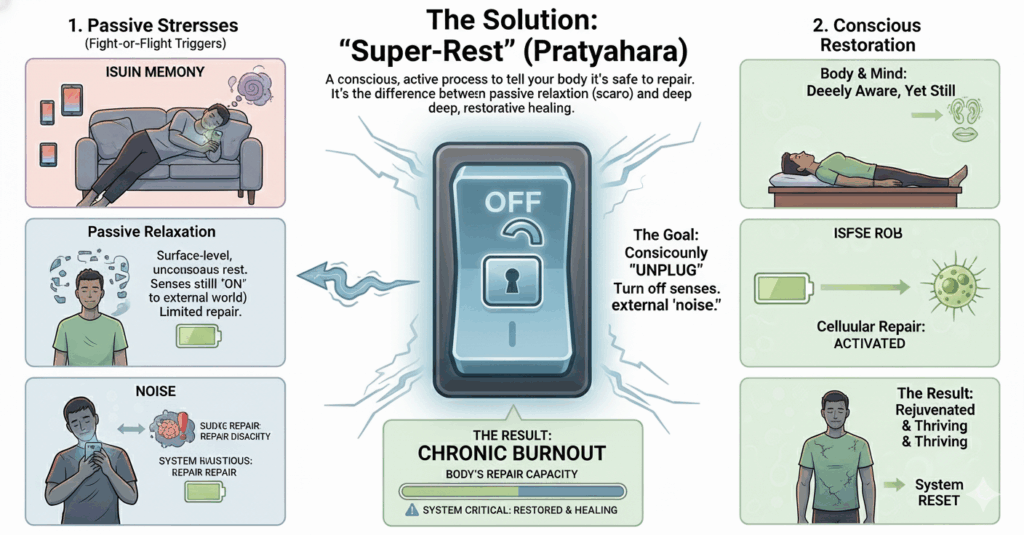
The text argues that there is a difference between passive relaxation (like scrolling on your phone) and conscious restoration.
- The Goal: To “unplug” your senses from the outside world.
- The Result: Instead of just being “unconscious” (like in sleep), you stay aware but turn off the “noise” of the world. This tells your brain it’s time for deep, cellular repair.
The “Onion” Approach (The 5 Layers)
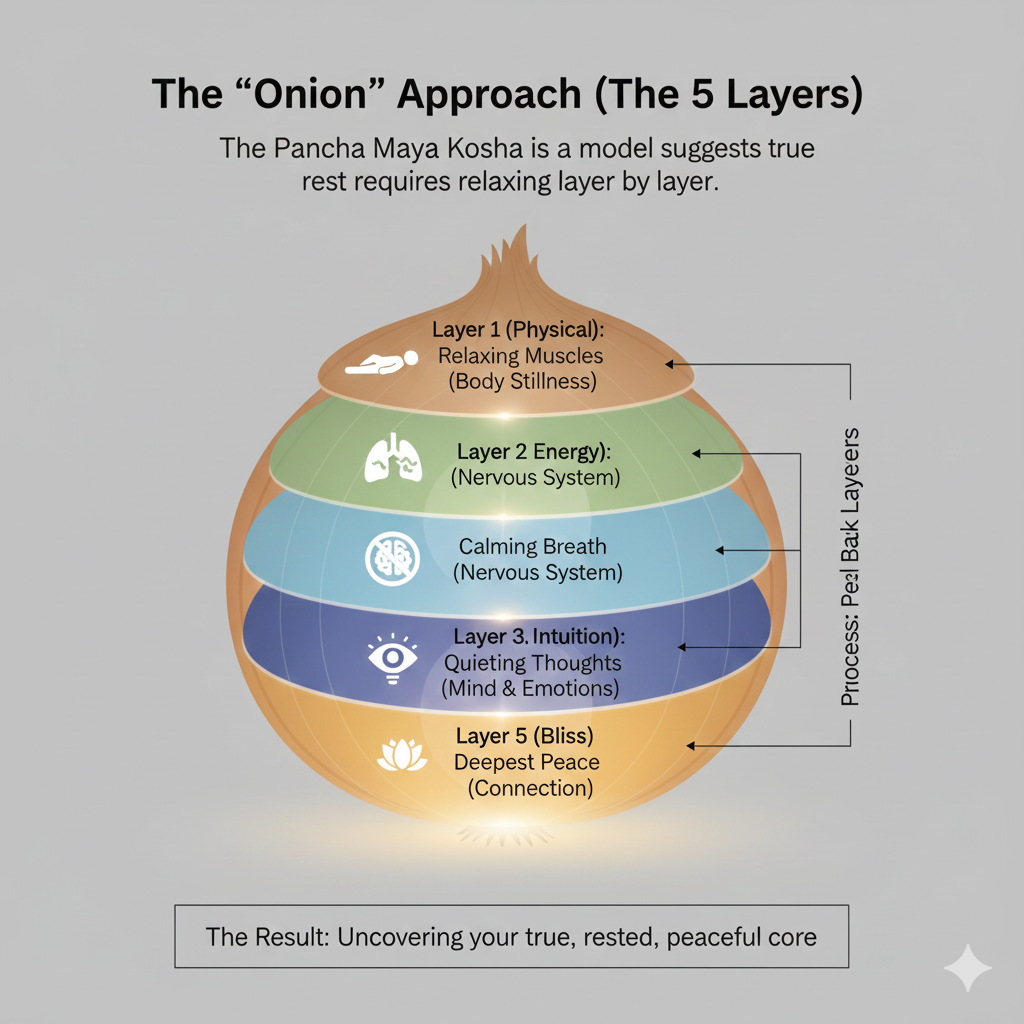
The document describes a model called the Pancha Maya Kosha, which suggests that to truly rest, you have to relax like an onion, layer by layer:
- Layer 1 (Physical): You start by relaxing your muscles (like lying still).
- Layer 2 (Energy): You use your breath to calm your nervous system.
- Layer 3 (Mental): You quiet your racing thoughts and emotions.
- Layer 4 (Intuition): Once the noise stops, you reach a state of “inner knowing” and clarity.
Why it Works: Clearing the “Clogs”
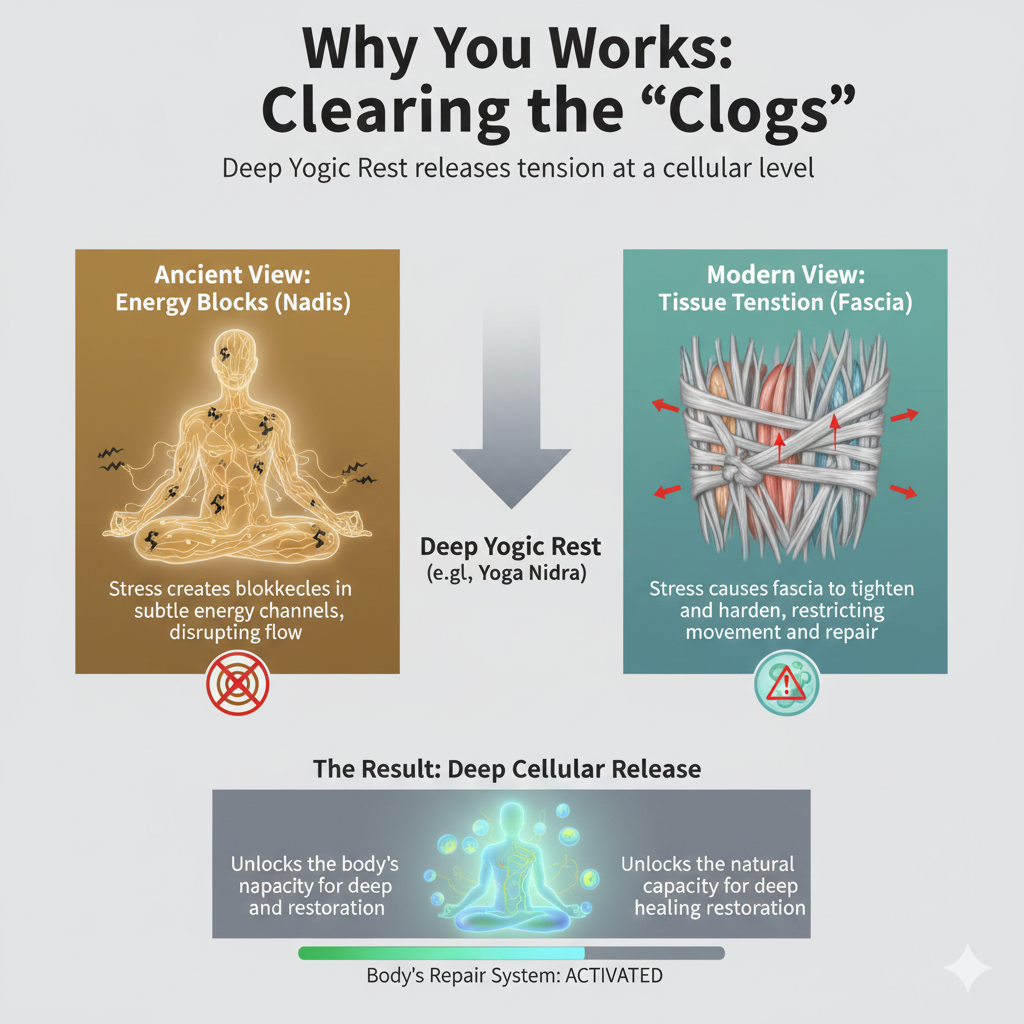
The text links ancient energy concepts to modern science:
- Ancient View: Stress creates “blocks” in your energy channels (Nadis).
- Modern View: Stress causes tension in your fascia (the connective tissue that wraps around your muscles and organs).
- The Result: When you practice deep yogic rest, you are essentially “stretching” and releasing the deep-seated tension in your tissues that regular sleep doesn’t reach.
The Bottom Line
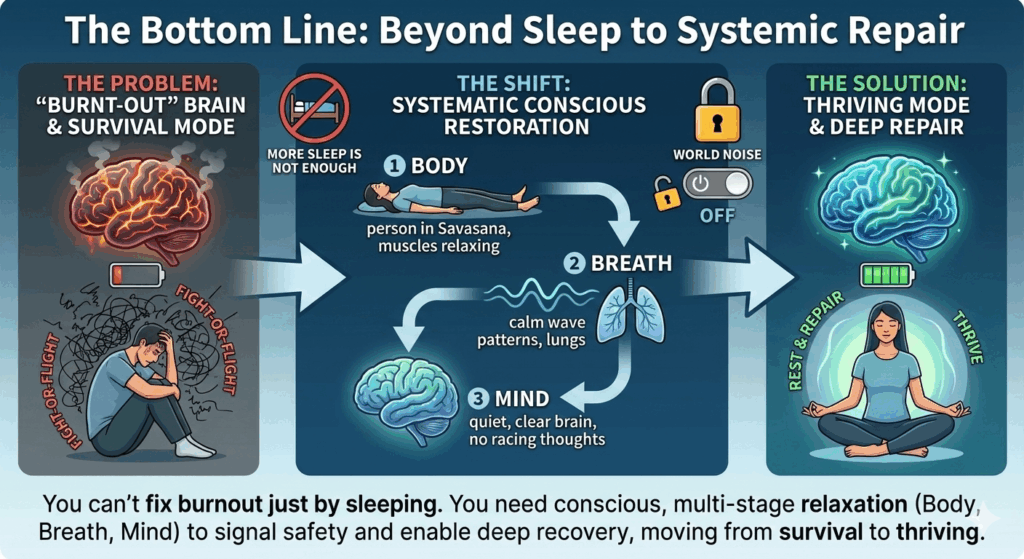
You can’t fix a “burnt-out” brain just by sleeping more. You need a systematic way to turn off the world so your body can focus on fixing itself. By consciously relaxing your body, breath, and mind in stages, you move from “survival mode” back into “thriving mode.”